
Hypermasculinity as Care: Male Belly Dancers & Surviving Heterosexism
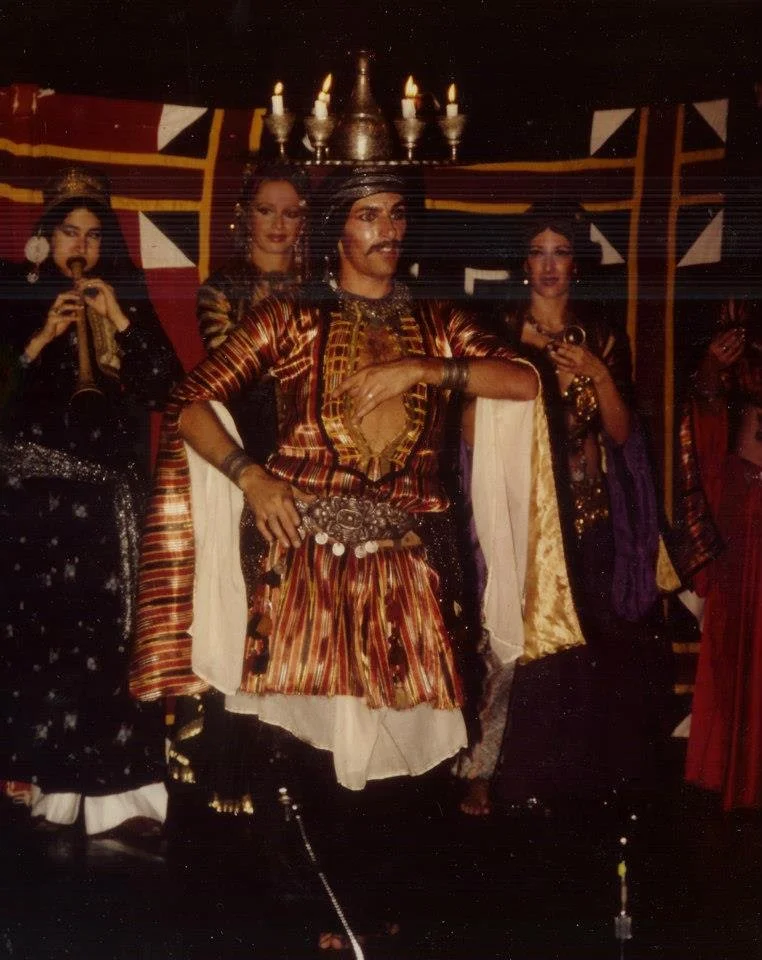
This paper examines how hypermasculinity operates as an ambivalent, tactical practice of care among men in belly dance, using the career of John Compton as a case study. Drawing from gender studies, dance and performance studies, and postcolonial critique, I analyze qualitative interviews and movement practices to demonstrate how hypermasculinity can be used both as protection against heterosexist discrimination and an unintentional mechanism of colonialism. Belly dance, a Middle Eastern and North African (MENA) dance form characterized by its embodied femininity, is primarily performed by women. As such, men’s participation is often seen as transgressive to their gender, despite belly dance’s absence of a gender-segregated movement canon. Therefore, male belly dancers are often expected to signal Western heteromasculinity in their performances, which is fundamentally antithetical to the aesthetic philosophy of belly dance, privileging performative Western heteromasculinity over movement qualities and embodied values of belly dance as a MENA performance tradition. This puts male belly dancers in a double-bind: uphold the embodied femininity of belly dance and risk heightened heterosexism and reputational damage; or mitigate risk as an act of care that necessitates adoption of Western, colonial ideals of masculinity misaligned with the form’s cultural and aesthetic values. In the case of John, his hypermasculine stylization compromised belly dance’s distinctive qualities, yet he is revered in the American belly dance community as a “father” of the style, revealing how this embedded masculinization can become institutionalized as aesthetic authority, simultaneously shielding male belly dancers from discrimination while unintentionally reproducing coloniality. By reframing these acts of hypermasculinity as protective rather than intentional “toxic”acts of domination, this paper aims to contribute to ongoing shifts in men’s and masculinity studies regarding gendered survival strategies in dance and performance.

Let’s Connect

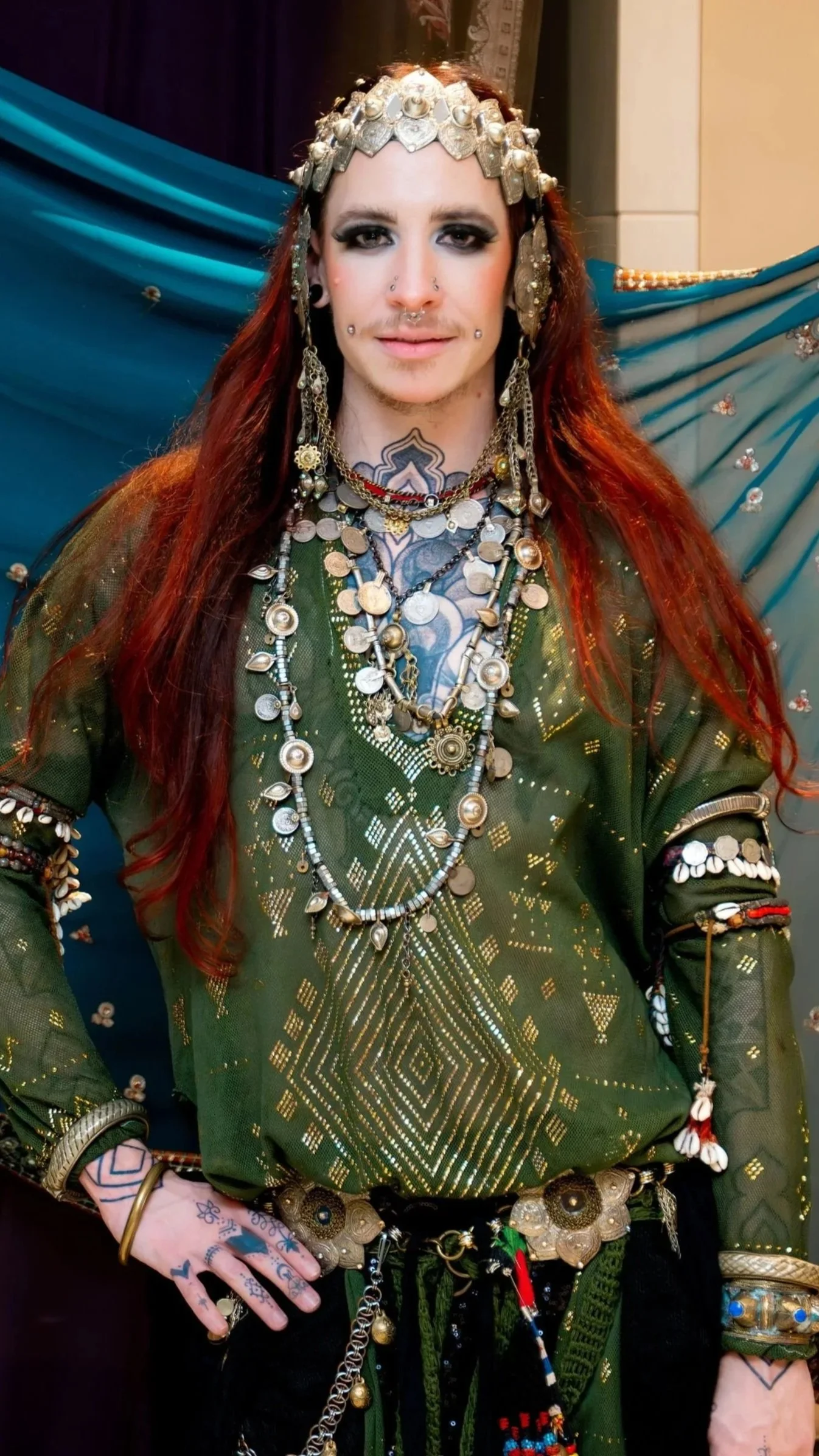
About MeI’m Drake von Trapp, a PhD student in Performance as Public Practice at UT Austin.
I have a BA and MA in Dance, and a post-master’s certificate in Multicultural Women’s and Gender Studies. My research scope is presently focused on men and masculinity in American belly dance, which also intersects with:
Fusion belly dance history
Gender expression, performance, and performativity
Cultural exchange and confluences
Orientalism and appropriation
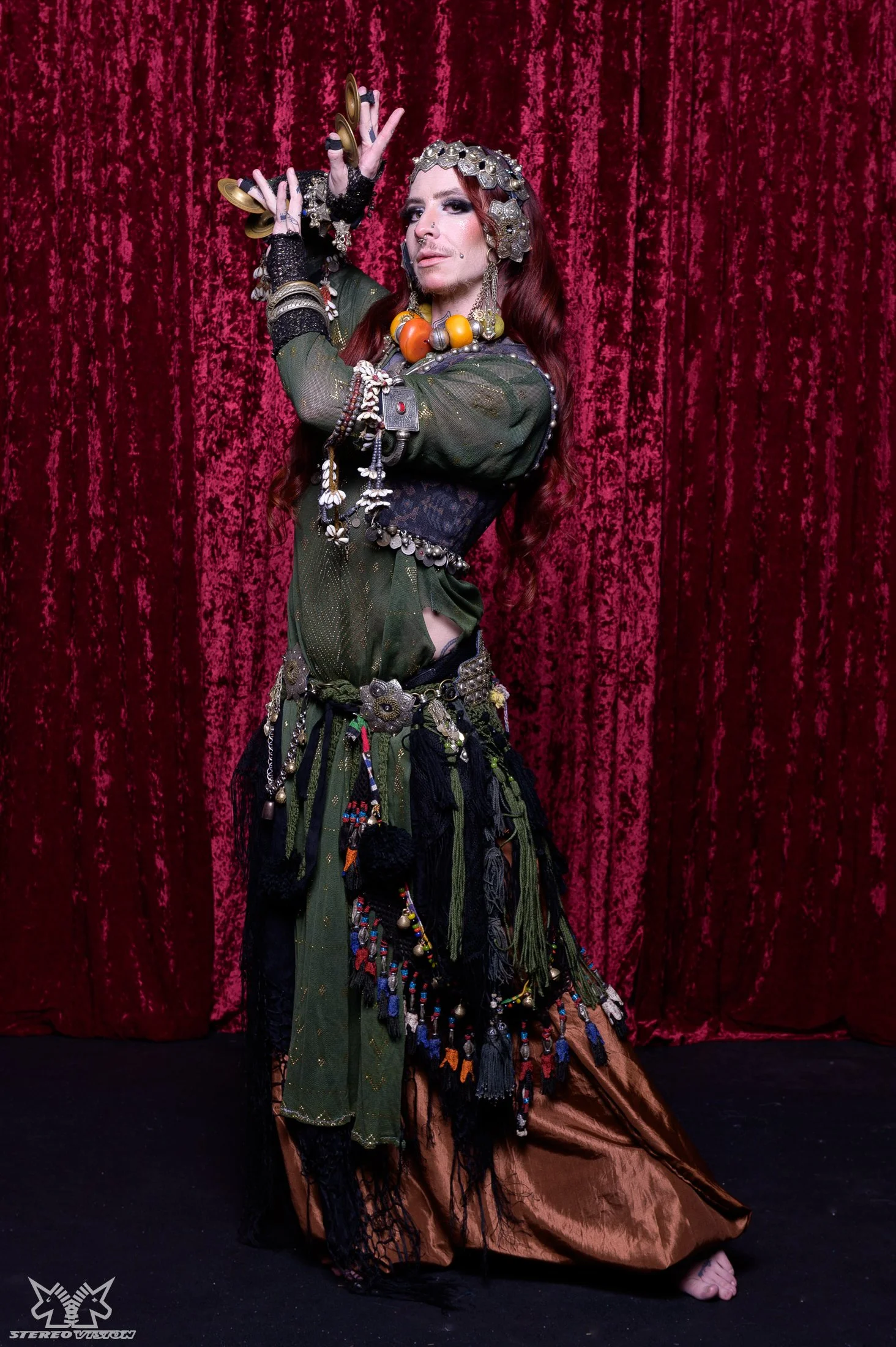
I’m also a professional belly dancer.
My intellectual labor is first and foremost in service of my community—the belly dance community. As a practitioner and active community member since 2008, my position as an artist-scholar offers a unique perspective that much of extant belly dance scholarship lacks: that of a dancer who is intimately connected to both their local belly dance ecosystem and the larger belly dance industry.
If you’re interested in learning more about my belly dancing, you can navigate the main pages of my website through the header menus, or click here.
My CV